Local timeline

@stefano this is a low-impact issue but noting for sake of completeness.
With markdown enabled the starting `#` is treated correctly as a header but it also tags the post with an empty tag: https://littleone.littlefedi.social/@shom/blog/tags/
The threaded replies on the blog interface looks great. The built in blogging and commenting functionality is really nicely conceived, awesome work!
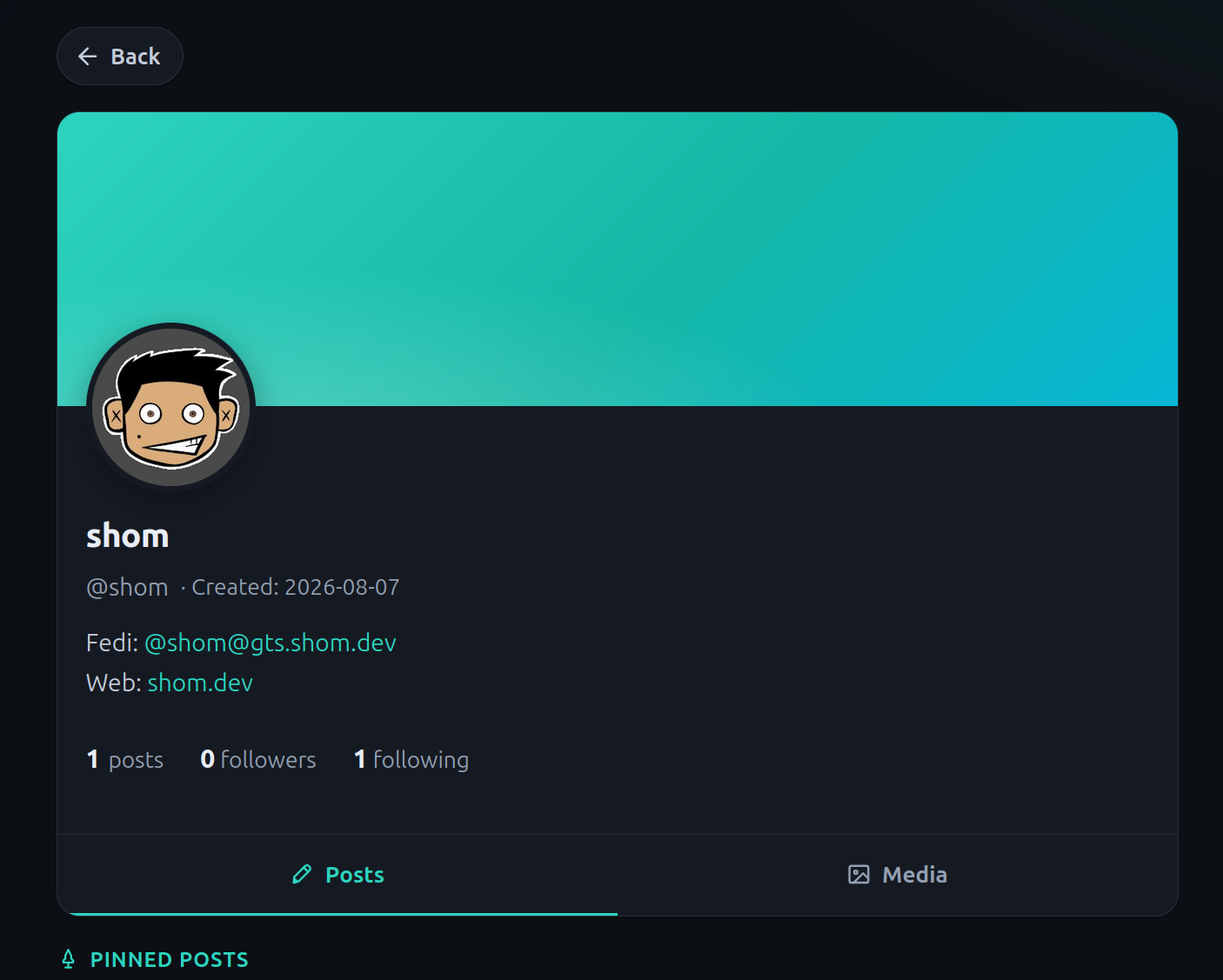
@stefano it might be related, my profile isn't showing the blog badge like your profile
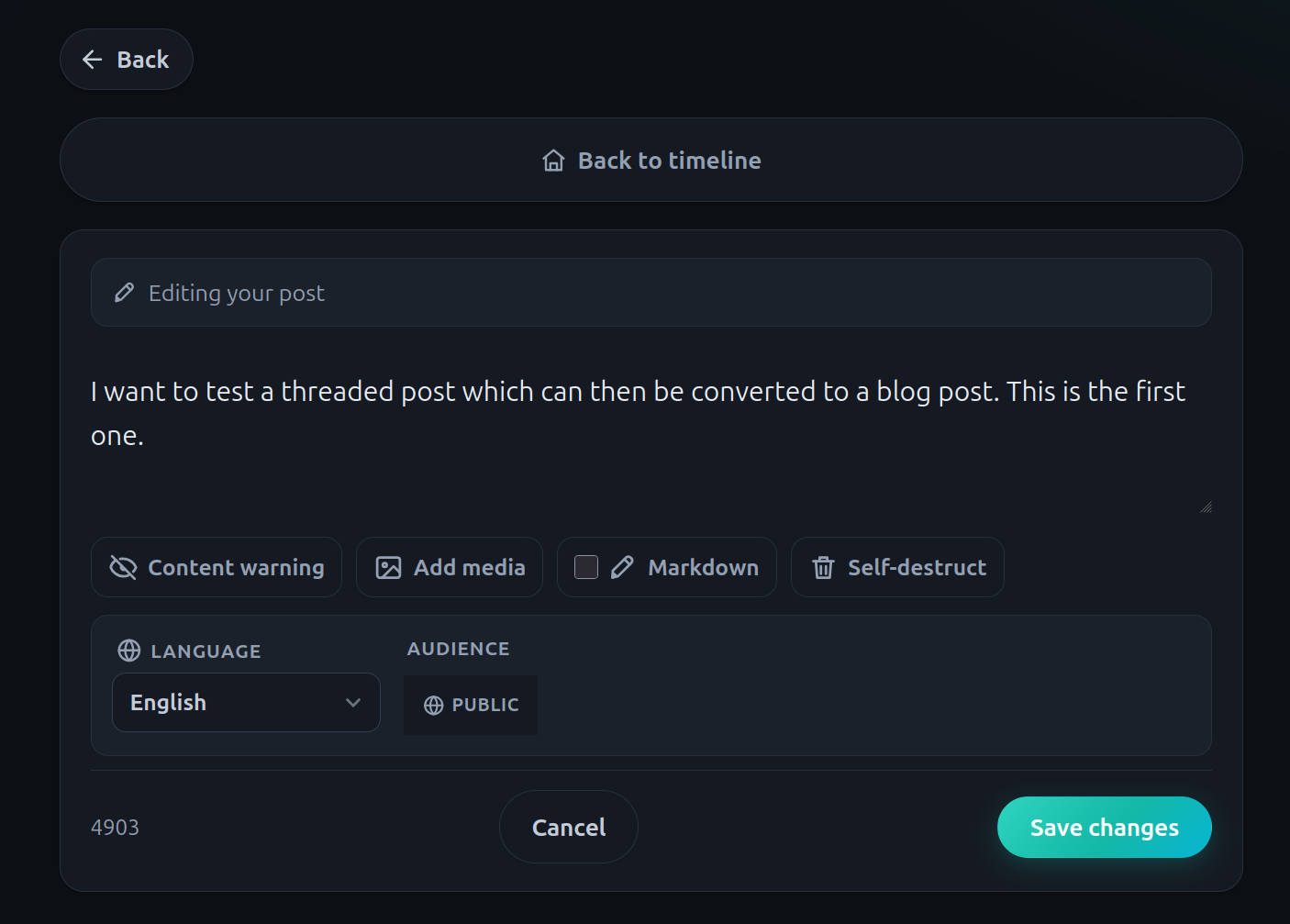
@stefano I'm not seeing the option while editing but I was able to make a new blog post (this one).
Screenshot attached
Currently converting an existing post to a blog post doesn't seem to be supported. Is that right @stefano or am I doing something wrong?
Blogging via micro-blogging
Blogging and maintaining a separate social feed is difficult. My primary interest is to be able to do it all in one platform and also convert existing posts into blog posts if they need to be persisted as a "body of work".
Current state
Currently, I end up copying and pasting that into a blog post, but that's a bit of friction.
Desired state
The idea is that if you end up writing a series of posts and it becomes something that is more meaty and has some value for longevity it can be persisted by simply changing the post type to a blog, after the fact.
Rationale
it's cognitively easier to write a series of posts instead of sitting down to write a blog post.
Also, it's cognitively easier to write a series of posts instead of sitting down to write a blog post. This might offer a nice transition path after the fact.
Currently, I end up copying and pasting that into a blog post, but that's a bit of friction.
The idea is that if you end up writing a series of posts and it becomes something that is more meaty and has some value for longevity it can be persisted.
I want to test a threaded post which can then be converted to a blog post. This is the first one.
These are some nice updates. It'll be nice to have a RSS feed delineation for posts, posts+boosts, posts+boosts+replies.
 @stefano
Update since yesterday:
New
- Opt-in federated RSS feed for your account
- Threaded federated replies now show up on static blog posts (merged from an experimental branch - works but not pretty yet, it's a start, watching it closely)
- New followers can require your approval before they're accepted - it was there, just hidden
- Default language, Markdown, and audience settings for new posts (replies/edits/redrafts keep original settings)
- DM button and blog badge on profile pages
Fixed
- Follow/unfollow path
- Video playback
- Search now resolves pasted remote status URLs directly
- RSS/blog reply preferences carry over on account export/import
- Profile pane improvements
All live now. Let us know if anything looks off!
@rqm I'm not sure. There are some plans to optimise the Mastodon API as some things need to be improved (like: ten persons boost the same post - you see it ten times).

This is awesome seriously !
It give me hope in a new form of web
Where anyone can easily run its own fediverse instance from home (even with its own blog!)
Everything in a simple package on a reasonable infrastructure
Thank you littleFedi team
@stefano
littleFedi: a Fediverse Server That Doesn't Need a Data Centre
I was fifteen, and there were no BBSes in my city. So every call was long distance, once a day, sometimes twice. I'd start the dialer and wait for that sound - the handshake, the negotiation, the hiss settling into a carrier - and then I was connected to a computer sitting in somebody's bedroom, a few hundred kilometres away. I was a co-sysop of a local board and a national moderator of a FidoNet area. None of my friends understood what I was doing, and they'd stopped asking to avoid an incomprehensible monologue. But I liked it, and that was enough for me.
Here's the thing about that computer in someone's bedroom. There was no data centre. No domain, no certificate authority, no hosting provider, no cloud. Just a machine, a phone line, and a person who'd decided to run it. If you wanted to reach it, you called it.
Now look at what it takes today to put a small server on the network so other people can talk to it. A public address, which most home connections no longer have. A domain, which you rent. A certificate, which somebody has to issue you. And, increasingly, a VPS somewhere, because the software won't fit on the hardware you already own.
We've added a lot of infrastructure between two people who just want to talk. That's what littleFedi is about.
What it is
A single Go binary. No Ruby, no Sidekiq, no Redis, no separate worker processes to babysit. You run init, answer a few questions, and you've got a working instance. It speaks ActivityPub, and it speaks the Mastodon client API well enough that existing apps just work.
It also runs on hardware that would make Mastodon - or even Akkoma - struggle. Most software in this space assumes a VPS with a few gigabytes of RAM and a database server next to it. We assumed a Raspberry Pi Zero W behind a home router. There's a low_power mode that tunes memory use, image decoding and thumbnail generation for exactly that kind of box, and it's tested on that kind of box, not just on a fast dev machine.
In spirit this puts littleFedi close to snac, which I've always liked a lot. Same conviction: a personal server shouldn't need a fleet of services behind it.
Federating without a public address
littleMesh is the part I'm most attached to, and it's the part that goes back to the modem.
Your instance generates an Ed25519 key pair. That key is its identity - the node's address is derived from the public key, so reaching that address means reaching the holder of that key and nobody else. No registrar, no certificate authority, nobody to ask permission from.
A small set of public lighthouse nodes help two instances find each other. Once they're introduced, the traffic runs over a second TLS session pinned to both node IDs. The lighthouse copies encrypted bytes back and forth. It never sees plaintext, and it can't impersonate either side. And if the two nodes can reach each other directly, they drop the relay after the introduction and talk peer to peer.
Which is, more or less, calling the BBS directly. Just without the phone bill.
The gateway into ordinary HTTPS
Mastodon and other regular servers can't resolve a mesh address on their own. There's no domain and no certificate for them to find.
That's what the optional HTTPS gateway is for. A lighthouse operator can run one alongside the relay, and it bridges the mesh into ordinary HTTPS for the rest of the web. The gateway has to terminate TLS to do that, so it can technically see the traffic passing through it. Which is exactly why it's a separate, opt-in piece and not something every node exposes by default.
It has two independent settings: one controls what the gateway lets ordinary internet visitors reach at all, and a second one applies again at the destination node. Left at their defaults, both allow only federation traffic - ActivityPub delivery, discovery, public media. Web login, API and media proxy stay closed unless an operator deliberately opens them.
Mesh peers talking to each other directly never touch the gateway at all. That exposure only applies to the bridge into the wider web. And all of this can be self-hosted.
Chronological timelines
Timelines are chronological. Nothing gets reordered by an engagement model.
If you want something closer to "what did I miss", there's a separate /catchup page you visit on purpose. It ranks posts using signals your own instance already has - how many people you follow boosted something, whether it continues a conversation you took part in. No external popularity score, no telemetry, nothing leaves the machine. You press "mark as read", it moves a divider, and that's the only thing it remembers.
Self-expiring posts
You can set a post to expire, with its own timer, instead of a fixed instance-wide setting.
This isn't a client-side trick that hides the post from view. The expiry goes on the same durable job queue that runs the rest of littleFedi's background work, so the deletion survives restarts and isn't lost if the process happens to be down at the moment the timer fires. When it does fire, the post is deleted and a real Delete activity goes out to everyone who received it - so it actually disappears from remote instances too, not just locally. Editing the post before then can push the timer back or cancel it.
Static blogs, with real threaded replies
littleFedi can take a Fediverse post and publish it as a page on a plain static blog, with its own Atom feed and permalinks that don't move even if you edit the post later. No JavaScript, no database hit on page load.
The part I find more interesting is that the replies aren't left out. If the author turns the option on, littleFedi pulls the public replies that were actually federated to the post, threads them the same way the timeline does, and bakes the whole tree into the generated HTML at build time. So a blog post can show a real comment thread, in the same static file, with the same guarantee as the rest of the page - no JavaScript, no live queries. Only public and unlisted replies qualify, obviously. Anything followers-only or direct never enters the picture.
Why it looks like this
This isn't minimalism for its own sake. It's about how many people simply can't run their own server today, because the requirements are too steep. The hardware, the ops complexity, or just needing a domain and a public address before you can start. We're trying to remove those barriers one at a time, while still shipping a real, federating, reasonably complete server: polls, quotes, scheduled posts, MFA, PostgreSQL and S3 if you want to scale up later.
I've written before about taking a semi-truck to buy salad. Hardware keeps getting more expensive and the software running on it keeps asking for more of it every year. That's backwards. If the machines cost more, the operational cost of what sits on them should go down, not up. Same with complexity: the default direction is to keep adding it, and we'd rather strip it out.
And there's the other half, which is closer to why any of us are doing this at all. It's the same thing that drew me to snac and to the way grunfink works on it, and the same thing that had me dialing a stranger's computer at fifteen. People building tools so that people can talk to each other. Nothing more dressed up than that. We'd rather show the servers running, talk about the Pi sitting in the corner, share a tiramisu photo if it comes up. The joy in this was never about the money it brings in. It's about what we end up building, humanly, because of it.
It's beta software, still short of a first release, and I'd rather say that plainly than oversell it. But it runs, and it federates. That's the part I wanted to write about.
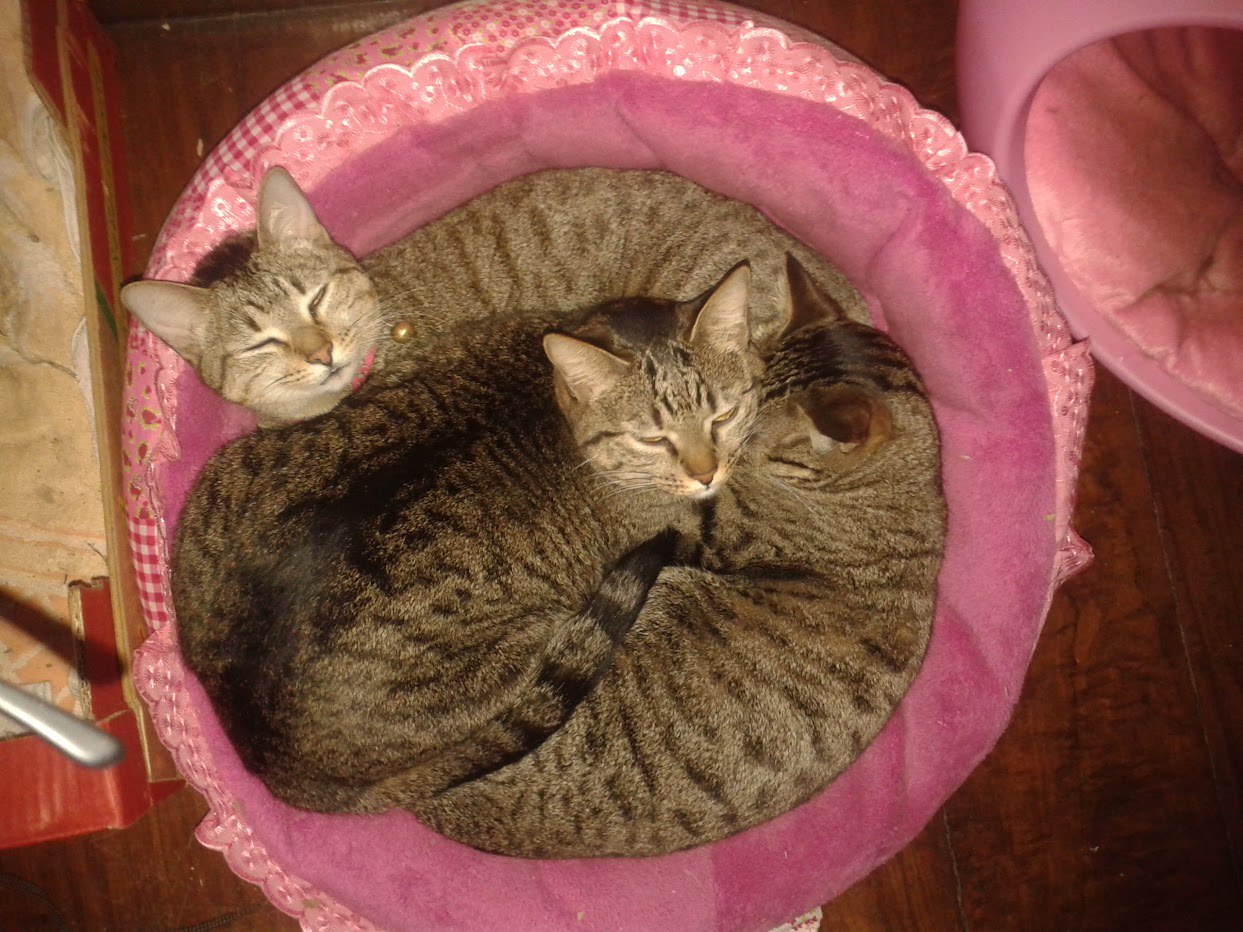
It’s just the two of us and the cats here at home. I enjoy cooking for her, and today—Friday—I had the chance to do just that. She’s teaching late at the technical school today and will come home hungry. As I cook, I find myself thinking about my father; he was a great cook (as was my mother), whereas I wasn't exactly a star pupil. My parents were taken from me far too soon—a truck accident on the highway claimed their lives when I was nineteen. Time went by—college, grad school—and it was only after I’d achieved some financial stability that the desire to cook truly "sprouted" in me; I haven't stopped since. I learned almost everything I know from them (albeit somewhat haphazardly) and have been refining my skills ever since. My wife really enjoys my cooking, but if my father were here, he’d surely correct me here and there: "You forgot this," or "That part should be done this way." I’ve lived much longer than they did, yet the certainty that I still had so much to learn from them has never left me. I can only be grateful—immensely grateful—for the brief nineteen years I got to spend with them (and regret not writing down the recipe for that roast lamb seasoning and so much else; now, I just try to imitate it).
littleFedi: a Fediverse Server That Doesn't Need a Data Centre
I was fifteen, and there were no BBSes in my city. So every call was long distance, once a day, sometimes twice. I'd start the dialer and wait for that sound - the handshake, the negotiation, the hiss settling into a carrier - and then I was connected to a computer sitting in somebody's bedroom, a few hundred kilometres away. I was a co-sysop of a local board and a national moderator of a FidoNet area. None of my friends understood what I was doing, and they'd stopped asking to avoid an incomprehensible monologue. But I liked it, and that was enough for me.
Here's the thing about that computer in someone's bedroom. There was no data centre. No domain, no certificate authority, no hosting provider, no cloud. Just a machine, a phone line, and a person who'd decided to run it. If you wanted to reach it, you called it.
Now look at what it takes today to put a small server on the network so other people can talk to it. A public address, which most home connections no longer have. A domain, which you rent. A certificate, which somebody has to issue you. And, increasingly, a VPS somewhere, because the software won't fit on the hardware you already own.
We've added a lot of infrastructure between two people who just want to talk. That's what littleFedi is about.
What it is
A single Go binary. No Ruby, no Sidekiq, no Redis, no separate worker processes to babysit. You run init, answer a few questions, and you've got a working instance. It speaks ActivityPub, and it speaks the Mastodon client API well enough that existing apps just work.
It also runs on hardware that would make Mastodon - or even Akkoma - struggle. Most software in this space assumes a VPS with a few gigabytes of RAM and a database server next to it. We assumed a Raspberry Pi Zero W behind a home router. There's a low_power mode that tunes memory use, image decoding and thumbnail generation for exactly that kind of box, and it's tested on that kind of box, not just on a fast dev machine.
In spirit this puts littleFedi close to snac, which I've always liked a lot. Same conviction: a personal server shouldn't need a fleet of services behind it.
Federating without a public address
littleMesh is the part I'm most attached to, and it's the part that goes back to the modem.
Your instance generates an Ed25519 key pair. That key is its identity - the node's address is derived from the public key, so reaching that address means reaching the holder of that key and nobody else. No registrar, no certificate authority, nobody to ask permission from.
A small set of public lighthouse nodes help two instances find each other. Once they're introduced, the traffic runs over a second TLS session pinned to both node IDs. The lighthouse copies encrypted bytes back and forth. It never sees plaintext, and it can't impersonate either side. And if the two nodes can reach each other directly, they drop the relay after the introduction and talk peer to peer.
Which is, more or less, calling the BBS directly. Just without the phone bill.
The gateway into ordinary HTTPS
Mastodon and other regular servers can't resolve a mesh address on their own. There's no domain and no certificate for them to find.
That's what the optional HTTPS gateway is for. A lighthouse operator can run one alongside the relay, and it bridges the mesh into ordinary HTTPS for the rest of the web. The gateway has to terminate TLS to do that, so it can technically see the traffic passing through it. Which is exactly why it's a separate, opt-in piece and not something every node exposes by default.
It has two independent settings: one controls what the gateway lets ordinary internet visitors reach at all, and a second one applies again at the destination node. Left at their defaults, both allow only federation traffic - ActivityPub delivery, discovery, public media. Web login, API and media proxy stay closed unless an operator deliberately opens them.
Mesh peers talking to each other directly never touch the gateway at all. That exposure only applies to the bridge into the wider web. And all of this can be self-hosted.
Chronological timelines
Timelines are chronological. Nothing gets reordered by an engagement model.
If you want something closer to "what did I miss", there's a separate /catchup page you visit on purpose. It ranks posts using signals your own instance already has - how many people you follow boosted something, whether it continues a conversation you took part in. No external popularity score, no telemetry, nothing leaves the machine. You press "mark as read", it moves a divider, and that's the only thing it remembers.
Self-expiring posts
You can set a post to expire, with its own timer, instead of a fixed instance-wide setting.
This isn't a client-side trick that hides the post from view. The expiry goes on the same durable job queue that runs the rest of littleFedi's background work, so the deletion survives restarts and isn't lost if the process happens to be down at the moment the timer fires. When it does fire, the post is deleted and a real Delete activity goes out to everyone who received it - so it actually disappears from remote instances too, not just locally. Editing the post before then can push the timer back or cancel it.
Static blogs, with real threaded replies
littleFedi can take a Fediverse post and publish it as a page on a plain static blog, with its own Atom feed and permalinks that don't move even if you edit the post later. No JavaScript, no database hit on page load.
The part I find more interesting is that the replies aren't left out. If the author turns the option on, littleFedi pulls the public replies that were actually federated to the post, threads them the same way the timeline does, and bakes the whole tree into the generated HTML at build time. So a blog post can show a real comment thread, in the same static file, with the same guarantee as the rest of the page - no JavaScript, no live queries. Only public and unlisted replies qualify, obviously. Anything followers-only or direct never enters the picture.
Why it looks like this
This isn't minimalism for its own sake. It's about how many people simply can't run their own server today, because the requirements are too steep. The hardware, the ops complexity, or just needing a domain and a public address before you can start. We're trying to remove those barriers one at a time, while still shipping a real, federating, reasonably complete server: polls, quotes, scheduled posts, MFA, PostgreSQL and S3 if you want to scale up later.
I've written before about taking a semi-truck to buy salad. Hardware keeps getting more expensive and the software running on it keeps asking for more of it every year. That's backwards. If the machines cost more, the operational cost of what sits on them should go down, not up. Same with complexity: the default direction is to keep adding it, and we'd rather strip it out.
And there's the other half, which is closer to why any of us are doing this at all. It's the same thing that drew me to snac and to the way grunfink works on it, and the same thing that had me dialing a stranger's computer at fifteen. People building tools so that people can talk to each other. Nothing more dressed up than that. We'd rather show the servers running, talk about the Pi sitting in the corner, share a tiramisu photo if it comes up. The joy in this was never about the money it brings in. It's about what we end up building, humanly, because of it.
It's beta software, still short of a first release, and I'd rather say that plainly than oversell it. But it runs, and it federates. That's the part I wanted to write about.
@rqm thanks. yes, it still doesn't work for "mass DMs", but I still copied and pasted the timeline post :-)
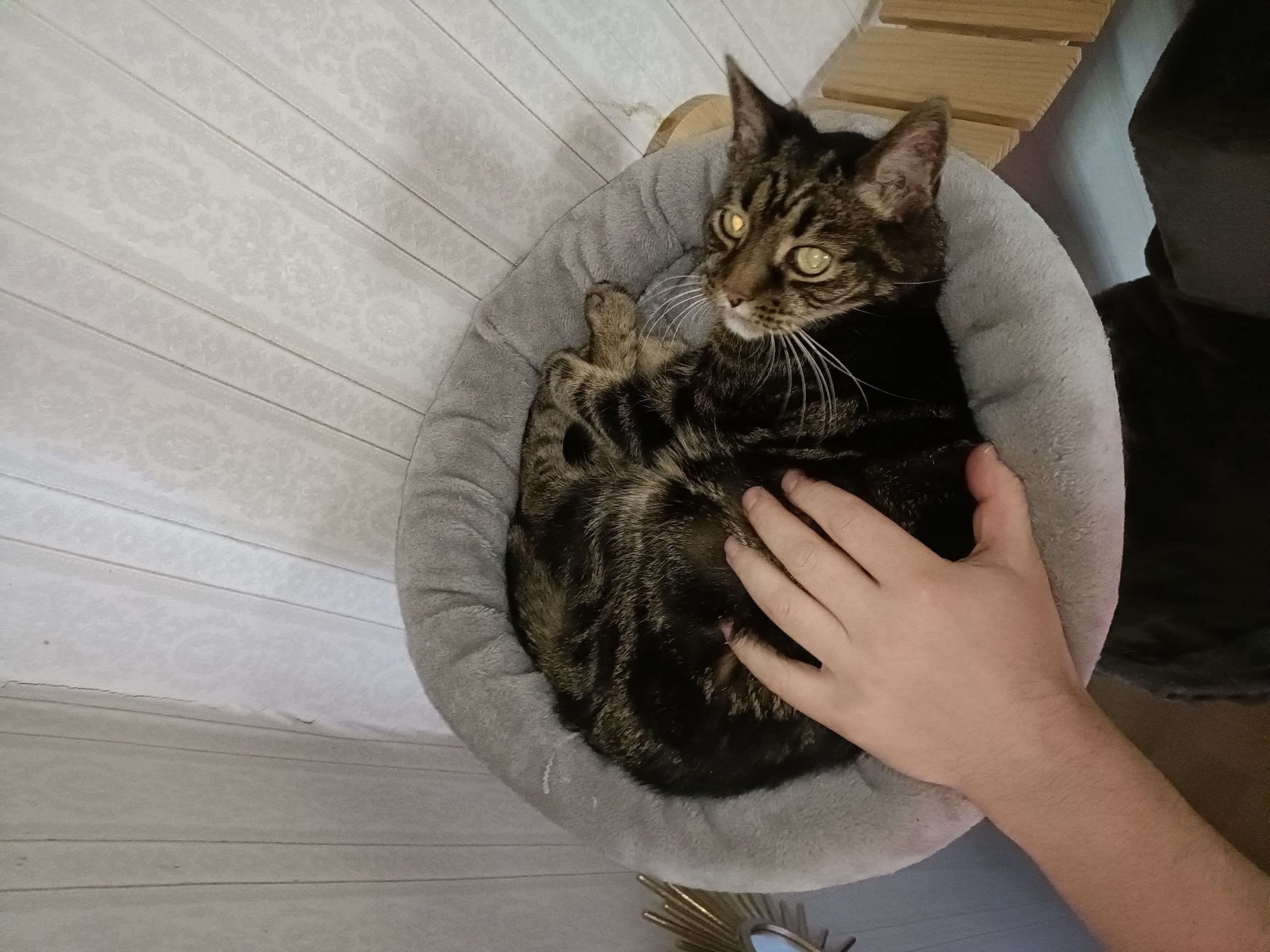
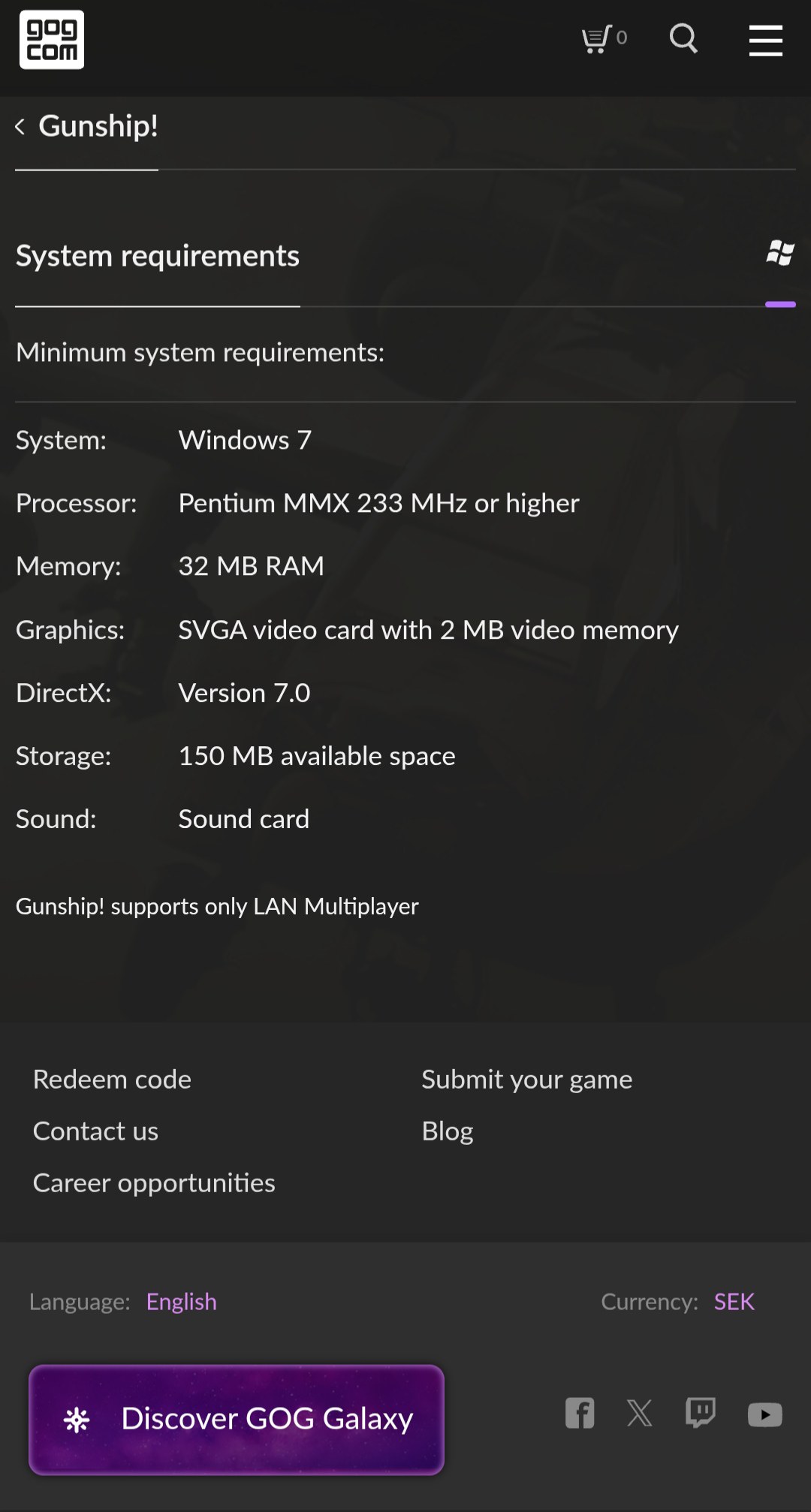
anyone tried #Windows7 on a #pentium 233Mhz MMX
#fridaythoughts #redmond #windows #retrogaming
#gunship
Update since yesterday:
New
- Opt-in federated RSS feed for your account
- Threaded federated replies now show up on static blog posts (merged from an experimental branch - works but not pretty yet, it's a start, watching it closely)
- New followers can require your approval before they're accepted - it was there, just hidden
- Default language, Markdown, and audience settings for new posts (replies/edits/redrafts keep original settings)
- DM button and blog badge on profile pages
Fixed
- Follow/unfollow path
- Video playback
- Search now resolves pasted remote status URLs directly
- RSS/blog reply preferences carry over on account export/import
- Profile pane improvements
All live now. Let us know if anything looks off!


Follow request approval found its way back in the config - nice ! Thanks !!
👍