Local timeline

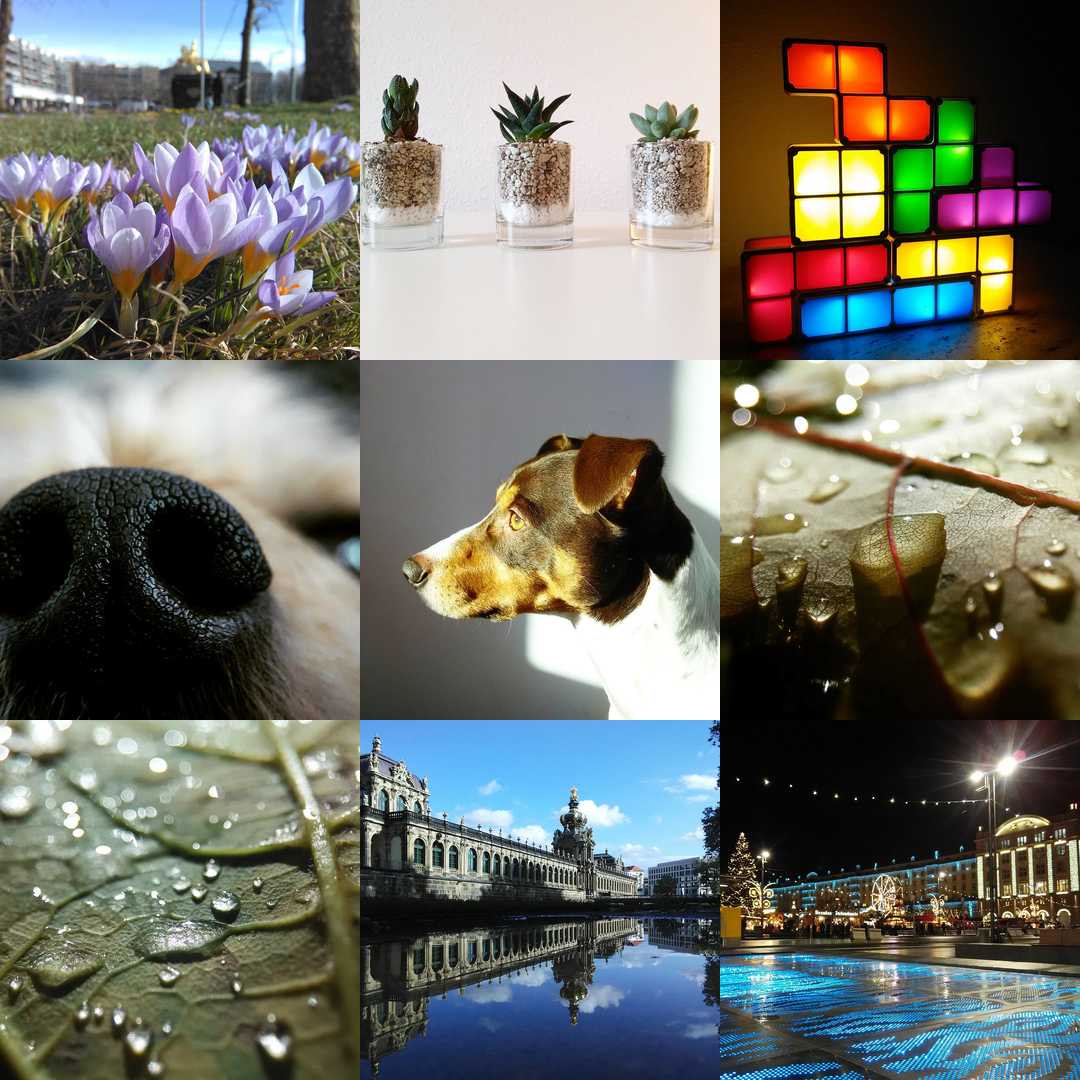
As I just searched for a photo from some years ago, I stumbled upon my "best nine pics from Instagram 2017", which I'd like to present you with this post.
From top left to bottom right:
- Crocuses in spring.
- Three minimalistic succulents.
- A "Tetris"-lamp.
- Macro-photo of a dog's nose.
- Gordy, the lovely dog of a former colleague.
- Macro-photo of droplets on a leaf.
- Macro-photo of droplets on another leaf.
- "Dresden Zwinger" mirrored on a pond.
- "Dresden Striezelmarkt", Christmas market on the "Altmarkt", in the inner city of Dresden.
@fasnix@fe.disroot.org @GossiTheDog@cyberplace.social yes, this is something I can confirm. I had to close the registrations at BSD Cafe (first time in three years) because of this.
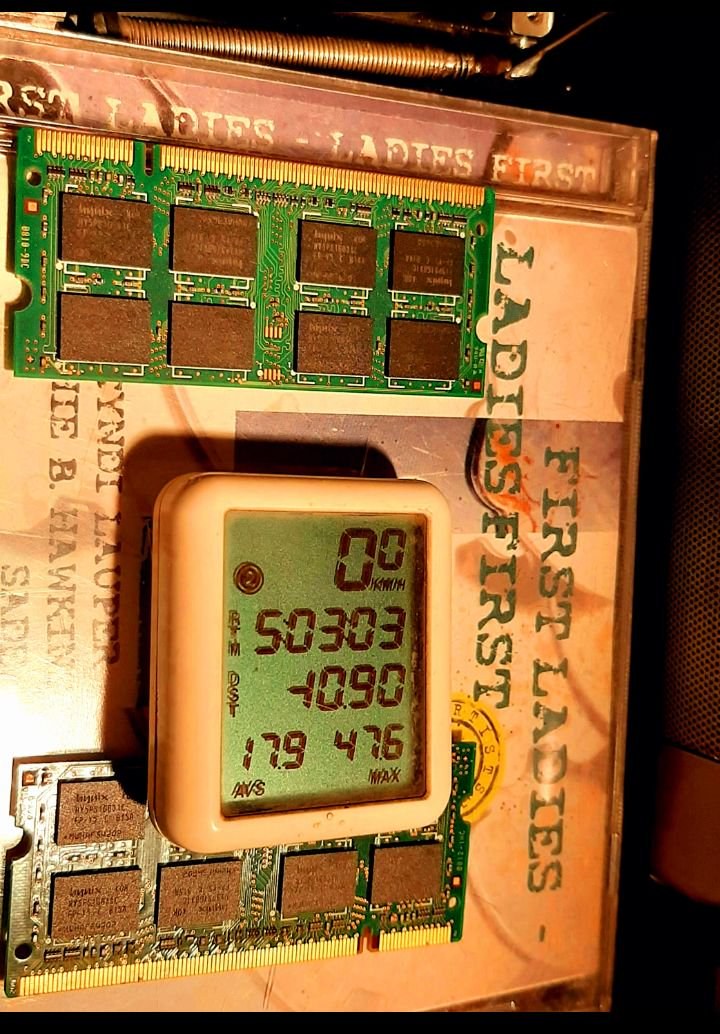
As you can see here I have composed this photograph with my bike computer clearly removed from its cradle on the race machine
This is from a period where seeing the stats of the ride is very important
It is also from a period when phones only have a yes no GSM and SMS capability
In the period when free bike computers could be run from Android systems, I stopped buying these excellent bike computers because most importantly I did not need to buy multiple copies of these bike computers
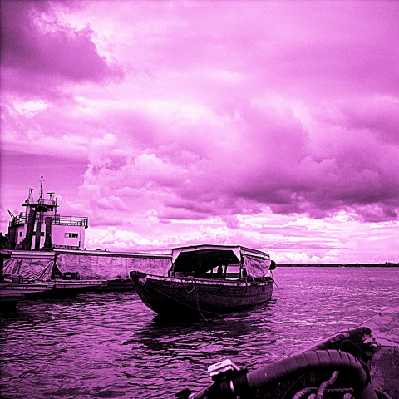
Sepia in warm light
#Photography #Nikon #small #sensor #APS #DSLR #filters #CIRC #Pol #Polarizer #Azul #81A #warming #UV
#Cycling #training #velocidad #PPE #race #machine #ThreadedRodsForBeginners
Back to the original VPS
Some more information about the littleFedi release process. We're almost there...
 @littlefedi_official
As promised, the littleFedi source code will become publicly available in about a week.
We will publish a snapshot of the complete source tree, together with some basic instructions to build and run it. Pre-built binaries will also be provided.
This will not yet be a proper littleFedi release. Documentation still needs work, testing needs to be expanded, and several things need to be cleaned up before we can call it that.
But the important part is that the code will finally be out there.
People will be able to read it, build it, experiment with it, start using littleFedi..
Over time, development will progressively move to the BSD Cafe Forgejo, where we will have the usual tools for issues, contributions, releases and collaborative development.
We're not quite there yet.
For now, the first step is simple: open the doors and let people get their hands on the code.
About one more week.
@oh_pyt@x.y05.eu netcup, but they don't sell them anymore for that price. You can install any OS as you can upload your ISO.
@ricardo@bsd.cafe @DeltaLima@social.la10cy.net exactly. One of those netcup Piko VPS that they were selling for 1 Euro/month
@polishdub@bsd.network this instance is currently on a "small" FreeBSD VM, so it would be going low. I ran this on an Orange PI PC and it was ok, too.
The real little instance is the @stefano@rpi0w.stefanomarinelli.it 's one

Hello,
I share with you a service designed by a colleague who, at a minimum, seems very original to me, by the idea and the concept.
Audio encoded in QR codes.
No apps, no servers, everything in your browser.
Just come across this interesting link
Shortwave radios offer a way to connect one location on Earth to practically anywhere else with minimal infrastructure. But these radios come with some drawbacks—a significant one being that, unlike satellite communications, their transmission rates for digital data are typically measured in just hundreds of bits per second.
https://spectrum.ieee.org/hermes-shortwave-radio-digital-data
"Rhizomatica, a Philadelphia-based nonprofit that has open-sourced a digital shortwave-radio set called the High-frequency Emergency and Rural Multimedia Exchange System, or HERMES. The set operates in the high-frequency (HF) band from 3 to 30 megahertz, as does Mercury, its digital modem. Rhizomatica staff travel around the globe to remote locations in countries like Bangladesh, Brazil, and Ecuador. Wherever they go, they use HERMES to help connect locals to the rest of the world."
Looks like it works, doesn't it?